Look for intention and consistency
A fountain pen combines components that must meet accurately while accommodating ink, air and repeated handling. Start where parts join: cap lip to barrel, section to body, clip to cap and trim to adjacent material. Look for consistent transitions and any unexpected gaps. A visible seam may be intentional; judge it against the design and a reliable reference, not an imagined ideal of seamlessness.
Rotate the pen slowly under a broad light source. A moving highlight can reveal uneven polishing, a small dent or a change in contour more clearly than a bright point light. Record what you see before deciding why it happened. Manufacturing variation, impact damage and later restoration can produce similar surface clues. An attractive explanation is still only a hypothesis until supported.
Separate process from praise
Terms such as hand-finished, hand-engraved and hand-assembled describe different activities. A turned body can receive substantial manual finishing. A decorated surface can combine machine preparation with hand work. Neither automation nor manual labour alone settles quality. Ask which operation is being described, what it contributes and whether the maker documents the process for the exact edition.
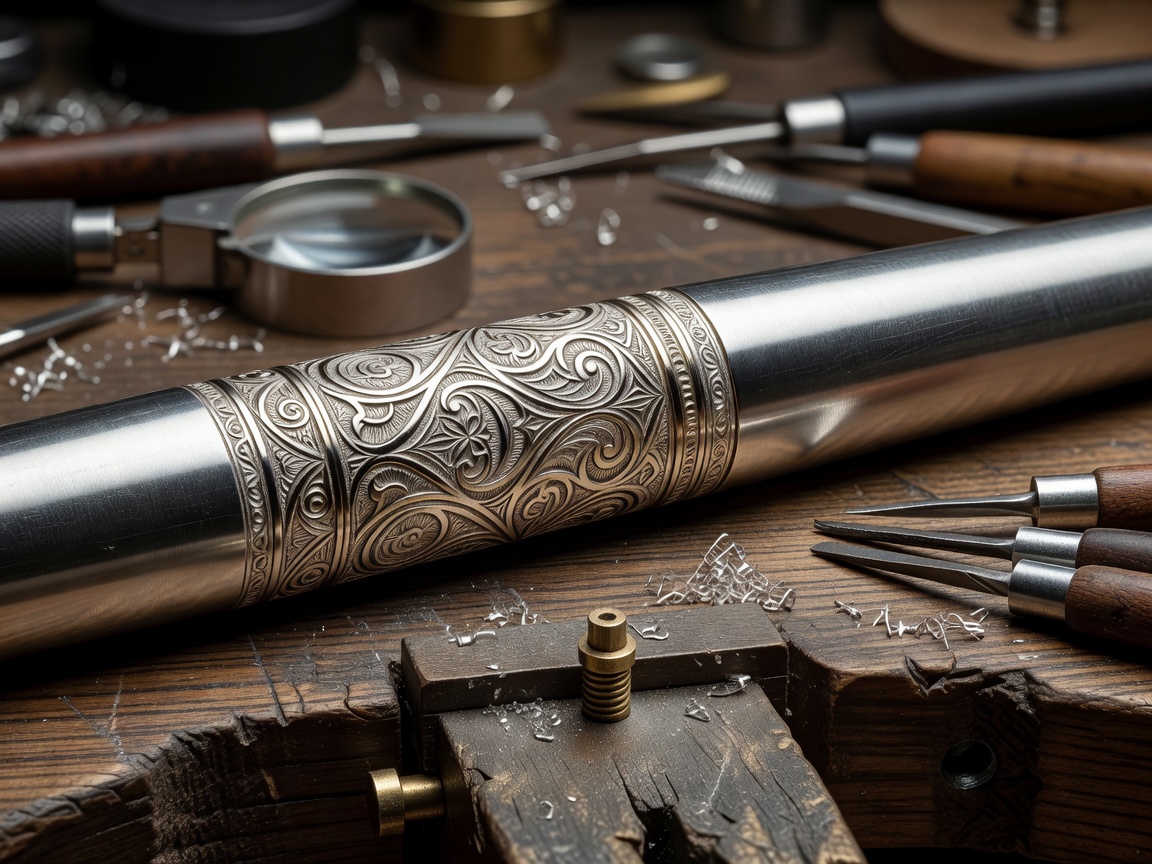
Guilloché refers to a family of regular decorative patterns associated with engine turning, but similar-looking effects can be produced in other ways. An image of intersecting lines does not prove a particular tool or method. Likewise, a uniform engraved inscription is not automatically evidence of either machine or hand work. Describe the observed pattern first and attribute the process only when the evidence supports it.
Read decorative authorship carefully
Japanese lacquer pens can carry artist signatures or workshop attributions. These deserve the same care as edition numbers. A signature is a useful identifier, but translating it and confirming its relationship to a particular object may require specialist knowledge. Do not infer an individual artist from a general brand history or from a vaguely similar motif on another pen.
Namiki’s Kokkokai collective and the lacquer work associated with Nakaya offer productive avenues for research into workshop traditions. In a different material vocabulary, Graf von Faber-Castell and Caran d’Ache provide examples of how metalwork, surface treatment and assembly contribute to a pen’s character. These names are research starting points, not a ranking or a claim that every product uses the same processes.
Hand work matters when you can explain what the hand has done—and why that work serves the object.
Inspect function without forcing it
If handling is permitted, open and close the cap gently using the intended mechanism. Notice roughness, unexpected looseness or resistance, but do not keep cycling a mechanism that feels wrong. Multiple-start threads can allow several final orientations, so a logo that does not align on one closure is not automatically a defect. Check model-specific information before drawing that conclusion.
Filling systems also leave evidence of design decisions. A cartridge-converter arrangement may simplify some maintenance; a piston or vacuum system may integrate more deeply with the body. None is inherently proof of superior craftsmanship. Inspect only what is safely accessible, and do not unscrew a section merely because a different model comes apart that way. Shellac, friction fits, hidden seals and delicate parts may be involved.
Include future service in your assessment
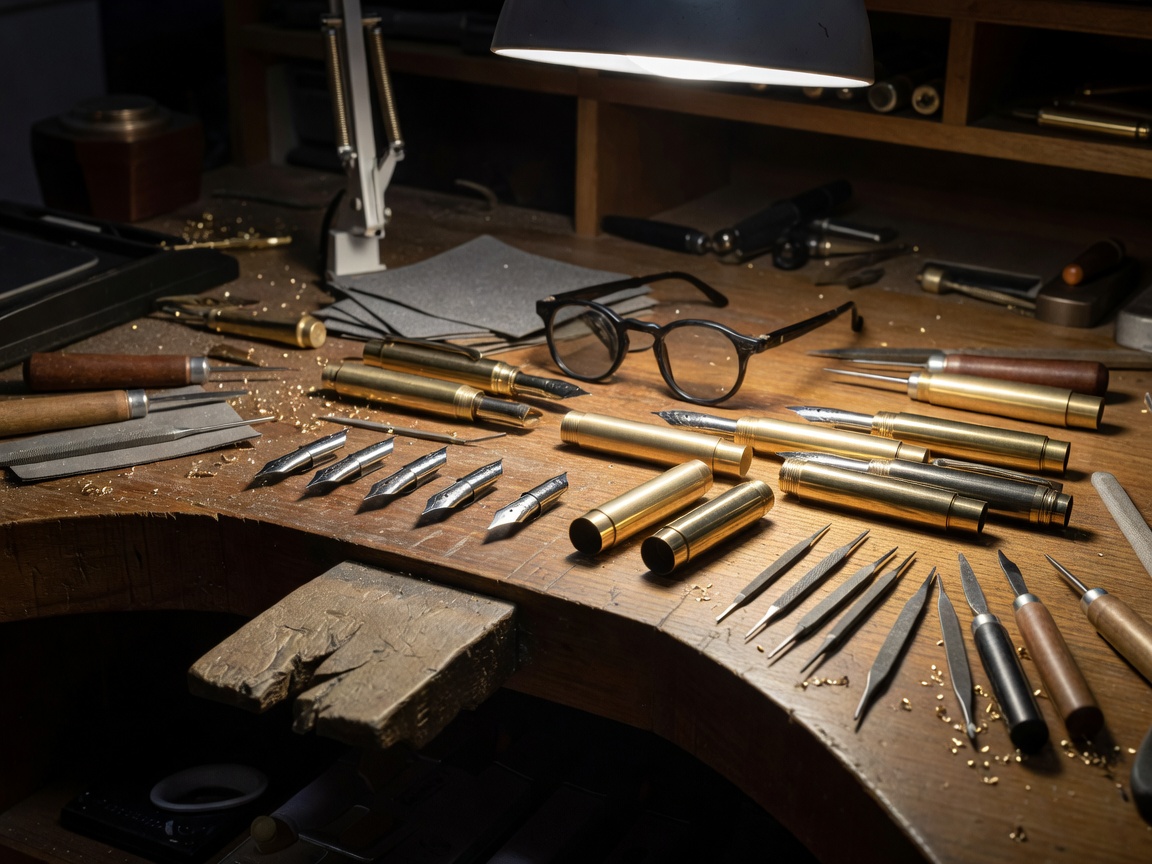
A collector edition can be technically accomplished and still difficult to repair. Ask whether replacement seals, feeds, nib units and clips are available, and whether a decorative component can be removed without disturbing its surface. Serviceability is not visible in a polished barrel, so consult current manufacturer guidance rather than assuming that a famous name guarantees indefinite parts support.
Keep service correspondence with the pen’s records. Note whether work was performed by the original maker, an authorised centre or an independent specialist. All three can be relevant, but the scope of work matters more than a vague statement that the pen was “professionally serviced.” A cleaning, a new seal and a replacement nib are different events with different implications.
Write a description that can be checked
Replace broad praise with specific observations: “cap closes without perceptible rocking,” “engraving remains crisp at the band edge,” or “lacquer shows a small chip beside the clip.” Where a judgment is personal, label it: “the section feels comfortable in my grip.” This style lets another reader distinguish the condition of the object from the preferences of its owner.
Consult makers such as Graf von Faber-Castell and Caran d’Ache for their own process descriptions, then keep those statements separate from your inspection notes. The strongest collector record joins documented making, present condition and acknowledged uncertainty. It does not need an investment prediction or a claim that every irregularity proves a human touch.