Name the layers separately
Begin a material description with three questions: what is the body made from, what has been applied to it and what forms the trim? “Black lacquer pen” may refer to lacquer over brass or over ebonite, with very different weight and construction. “Silver” may describe a colour, plating or a solid alloy. A useful record keeps appearance and documented composition in separate fields.
Manufacturer language is sometimes broad. “Precious resin” is not a universal technical specification, and “resin” covers more than one polymer family. Do not assign a precise chemistry from a photograph. Record the maker’s term, then add observations such as translucency, visible pattern orientation and surface condition. These observations remain useful even when the exact formulation is proprietary or unavailable.
Read the finish specimens
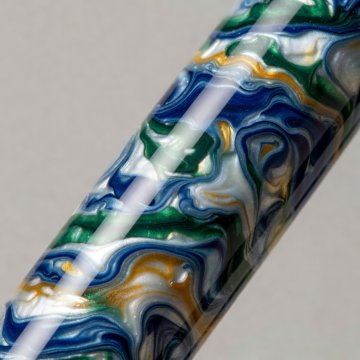
Polished resin
Follow reflected light along the barrel to reveal scratches, waviness and transitions around fitted parts. Pattern depth does not establish material chemistry.
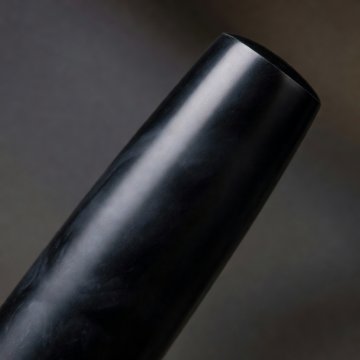
Ebonite
Hard rubber can show oxidation or colour change. Keep observed discolouration distinct from the maker’s intended mottling or pattern.
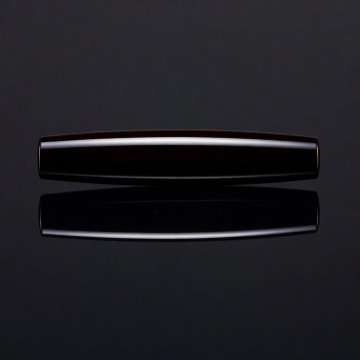
Lacquer over a substrate
Examine edges and transitions without probing them. Coating condition and body construction are related questions, not interchangeable descriptions.
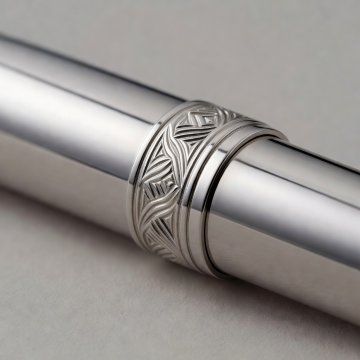
Metal and plating
Look at high-contact edges for wear. A colour change may indicate exposed substrate, tarnish or residue; establish which before treating it.
Give celluloid a precise description
Historic and modern pen descriptions can use “celluloid” differently. Cellulose nitrate and cellulose acetate are not identical materials, and a decorative pattern does not identify either one reliably. Seek a model-specific statement. Omas and Montegrappa are useful names to encounter when researching Italian celluloid pens, but a brand association is not proof of the material in a particular example.
Some ageing cellulose nitrate objects can deteriorate and affect nearby materials. Warning signs may include unusual odour, distortion, sticky surfaces or visible degradation, but these observations are not a complete diagnosis. Do not attempt heat tests, solvent tests or scraping. Separate a suspect object from close contact with other pens and seek specialist conservation advice about assessment and storage.
Understand what urushi names
Urushi refers to a traditional lacquer material and a family of processes, not merely a glossy appearance. The substrate, preparation, layering and final treatment all matter. Maki-e decoration may use metal powders in lacquer, while techniques such as raden incorporate shell. A photographed sparkle is insufficient to identify the exact decorative method or the sequence used to achieve it.
Nakaya, Namiki and Wajima are useful starting points for learning about lacquer traditions and their modern applications. Wajima is a place associated with lacquer craft, not a universal provenance label for every urushi pen. Attribution should follow a maker’s documented statement. Fully cured lacquer and uncured lacquer also present different handling considerations; do not assume that making or repairing urushi is a safe home project.
A beautiful surface can be fully appreciated without pretending that its chemistry is visible.
Inspect wear before reaching for polish
Polishing removes or changes material. It can soften engraving, alter a brushed texture or thin plating at an edge. A bright result is not necessarily a more original result. Photograph the surface under indirect light first, including the clip contact area, cap lip, barrel end and section. Note scratches, chips, cracks and staining in plain language rather than combining them into a vague condition grade.
Check the maker’s care instructions for the exact model. Avoid household solvents, alcohol, abrasives and hot water unless an appropriately qualified source has confirmed compatibility. A cleaning method suitable for an uncoated metal part can be unsuitable for a neighbouring resin or lacquer surface. When construction is uncertain, restraint is a better default than an improvised treatment.
Connect materials to use, not status
Solid metal can add weight, but weight is not a synonym for quality. A lightweight resin pen may balance better in a particular hand; an ebonite section may have a texture someone prefers. Distinguish measured observations, such as overall mass, from subjective ones, such as warmth or comfort. Note whether the cap is posted when comparing balance.
For documented materials and care, start with Montegrappa, Nakaya and Namiki where relevant. Museum conservation resources, including those of the Victoria and Albert Museum, can provide broader material context. They do not replace model-specific advice, especially for a pen with mixed materials or an uncertain repair history.